
时间:2025-06-22 09:54
人气:
作者:admin
Java 中悲观锁的一种实现,相比于 volatile 是重量级锁,可以保证原子性、有序性、可见性
重量级
会引起上下文切换(会造成线程阻塞)
原子性
synchronized 方法、synchronized 代码块被视作原子的
有序性
线程 A 对于锁 X 的释放发生于线程 B 对于锁 X 的申请之前。
也就是说线程 A 在释放锁之前的所有写操作造成的更新,之后线程 B 在申请锁之后的读操作都可以看到这些更新结果
可见性
synchronized 方法或代码块里修改的共享变量,在退出临界区时会写回主内存
当我们进行多线程开发的时候,需要在多个线程之间进行通信,而通信一般都是通过读写共享变量实现的,如果操作的顺序不当就会出现异常的结果。
举个例子,如下一段程序
public class MultiThread
{
    private static int val = 0;

    public static void main(String[] args) throws InterruptedException
    {
        Thread thread1 = new Thread(()->{
            for (int i = 0; i < 100000; i++)
            {
                val++;
            }
        });

        Thread thread2 = new Thread(()->{
            for (int i = 0; i < 100000; i++)
            {
                val--;
            }
        });


        thread1.start();
        thread2.start();

        thread1.join();
        thread2.join();
        System.out.println(val);
    }
}
thread1 对 val 执行 100000 次加操作,而 thread2 对 val 执行 100000 此减操作,最终的结果应该是 0,但实际得出的结果却是不确定的。
假设这两个线程为 thread1 和 thread2,操作如下:
第1步:thread1读取内存中的val到工作内存中,值为0
第2步:thread1对val+1,写回工作内存,此时工作内存中的值为1
第3步:thread1失去cpu
第8步:thread1把工作内存中的1写回主内存 //此时主内存中的值为1!!!
第4步:thread2读取内存中的val到工作内存中,值为0
第5步:thread2对val-1,写回工作内存
第6步:thread2把工作内存中的值写回主内存 //此时主内存中的值为-1
第7步:thread2失去cpu
由上面的步骤可以看出最后内存中的 val 为-1,但是正确的结果应该是 0 才对。
也很简单,就是加锁,如下使用了 synchronized 代码块
public class MultiThread
{
    private static int val = 0;

    public static void main(String[] args) throws InterruptedException
    {
        Thread thread1 = new Thread(() -> {

            for (int i = 0; i < 100000; i++)
            {
                synchronized (MultiThread.class)
                {
                    val++;
                }

            }
        });

        Thread thread2 = new Thread(() -> {

            for (int i = 0; i < 100000; i++)
            {
                synchronized (MultiThread.class)
                {
                    val--;
                }
            }
        });


        thread1.start();
        thread2.start();

        thread1.join();
        thread2.join();
        System.out.println(val);
    }
}
Synchronize 有三种用法
public class SychronizedTest1
{
    private static StringBuilder stringBuilder = new StringBuilder();

    public static void main(String[] args) throws InterruptedException
    {

        Thread addThread = new Thread(() -> {
            for (int j = 0; j < 5000; j++)
            {

                append("aaaa");
            }
        });

        Thread decrThread = new Thread(() -> {
            for (int j = 0; j < 5000; j++)
            {
                append("aaaa");

            }
        });

        addThread.start();
        decrThread.start();
        addThread.join();
        decrThread.join();


        String str = stringBuilder.toString();
        System.out.println(str);
        System.out.println(str.length());
        System.out.println(str.contains("a"));
        System.out.println(str.length() == 5000 * 2 * 4);//true
    }

    private synchronized static void append(String val)
    {
        stringBuilder.append(val);
    }


}
public class SychronizedTest2
{
    private static StringBuilder stringBuilder = new StringBuilder();

    public static void main(String[] args) throws InterruptedException
    {
        SychronizedTest2 sychronizedTest2 = new SychronizedTest2();

        Thread addThread = new Thread(() -> {
            for (int j = 0; j < 5000; j++)
            {

                sychronizedTest2.append("aaaa");
            }
        });

        Thread decrThread = new Thread(() -> {
            for (int j = 0; j < 5000; j++)
            {
                sychronizedTest2.append("aaaa");

            }
        });

        addThread.start();
        decrThread.start();
        addThread.join();
        decrThread.join();


        String str = stringBuilder.toString();
        System.out.println(str);
        System.out.println(str.length());
        System.out.println(str.contains("a"));
        System.out.println(str.length() == 5000 * 2 * 4);//true
    }

    private synchronized void append(String val)
    {
        stringBuilder.append(val);
    }


}
因为使用的是当前实例对象,如果创建两个实例对象,那么肯定是线程不安全了,如下:
public class SychronizedTest2
{
    private static StringBuilder stringBuilder = new StringBuilder();

    public static void main(String[] args) throws InterruptedException
    {
        SychronizedTest2 sychronizedTest2 = new SychronizedTest2();
        SychronizedTest2 sychronizedTest3 = new SychronizedTest2();

        Thread addThread = new Thread(() -> {
            for (int j = 0; j < 5000; j++)
            {

                sychronizedTest2.append("aaaa");
            }
        });

        Thread decrThread = new Thread(() -> {
            for (int j = 0; j < 5000; j++)
            {
                sychronizedTest3.append("aaaa");

            }
        });

        addThread.start();
        decrThread.start();
        addThread.join();
        decrThread.join();


        String str = stringBuilder.toString();
        System.out.println(str);
        System.out.println(str.length());
        System.out.println(str.contains("a"));
        System.out.println(str.length() == 5000 * 2 * 4);//false
    }

    private synchronized void append(String val)
    {
        stringBuilder.append(val);
    }


}
public class SychronizedTest3
{
    private static StringBuilder stringBuilder = new StringBuilder();

    public static void main(String[] args) throws InterruptedException
    {

        Thread addThread = new Thread(() -> {
            for (int j = 0; j < 5000; j++)
            {

                append("aaaa");
            }
        });

        Thread decrThread = new Thread(() -> {
            for (int j = 0; j < 5000; j++)
            {
                append("aaaa");

            }
        });

        addThread.start();
        decrThread.start();
        addThread.join();
        decrThread.join();


        String str = stringBuilder.toString();
        System.out.println(str);
        System.out.println(str.length());
        System.out.println(str.contains("a"));
        System.out.println(str.length() == 5000 * 2 * 4);//true
    }

    private static void append(String val)
    {
        synchronized (SychronizedTest3.class)
        {
            stringBuilder.append(val);
        }
    }


}
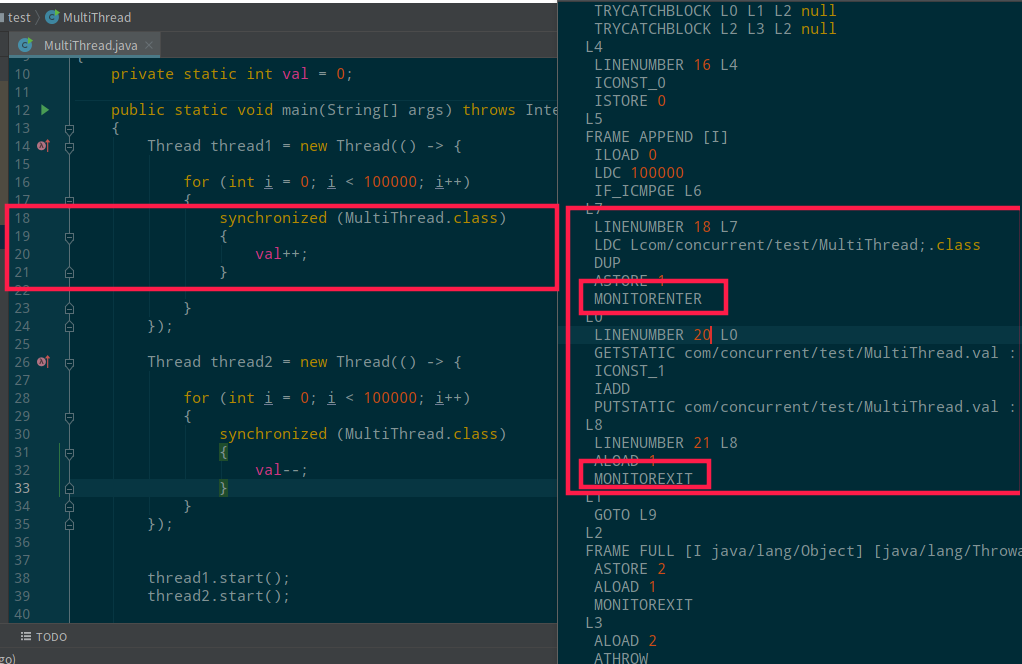
在 Idea 中运行下面的代码,并且使用 show byte code 插件查看字节码
public class MultiThread
{
    private static int val = 0;

    public static void main(String[] args) throws InterruptedException
    {
        Thread thread1 = new Thread(() -> {

            for (int i = 0; i < 100000; i++)
            {
                synchronized (MultiThread.class)
                {
                    val++;
                }

            }
        });

        Thread thread2 = new Thread(() -> {

            for (int i = 0; i < 100000; i++)
            {
                synchronized (MultiThread.class)
                {
                    val--;
                }
            }
        });


        thread1.start();
        thread2.start();

        thread1.join();
        thread2.join();
        System.out.println(val);
    }
}
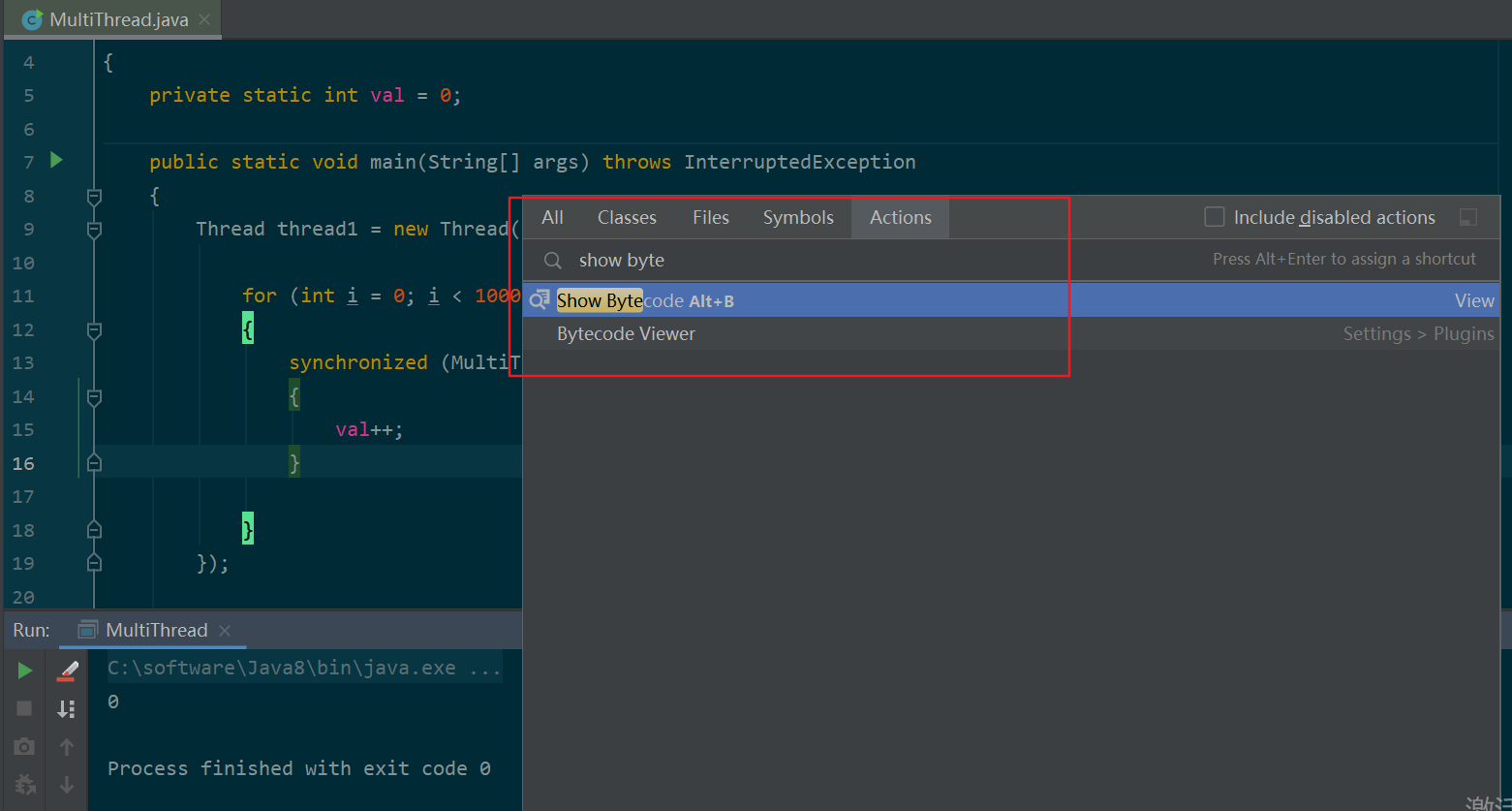
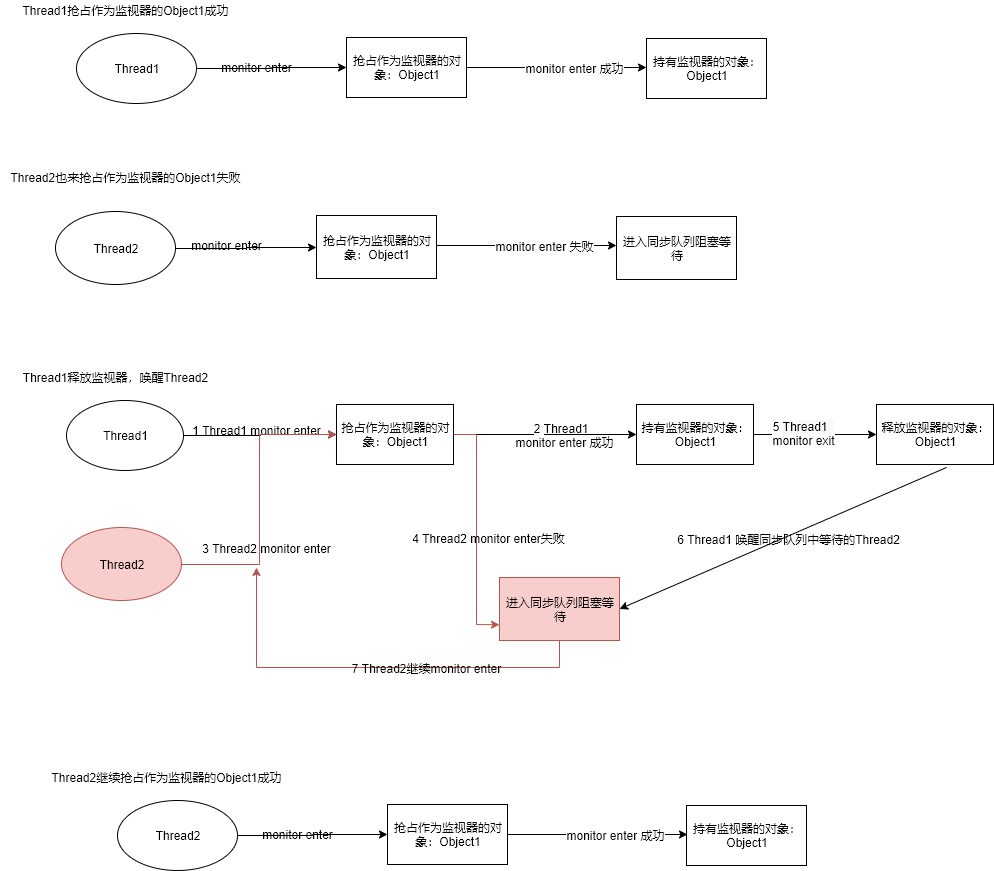
每个对象都可以看作是一个 monitor。
当这个对象作为 monitor 使用时,同一时间只能由一个线程持有。所谓持有其实就是做个标记,这个标记做在 java 对象头里面
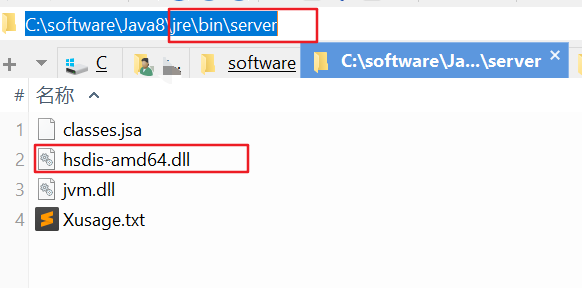
参考How to build hsdis-amd64.dll and hsdis-i386.dll on Windows或者hsdis-amd64.7z
public class TestSynchronized
{
    private static int i = 0;
    public static void main(String[] args)
    {
        test();
    }

    private static void test()
    {
        i++;
    }
}
public class TestSynchronized
{
    private static int i = 0;
    public static void main(String[] args)
    {
        test();
    }

    private static void test()
    {
        synchronized (TestSynchronized.class)
        {
            i++;
        }
    }
}
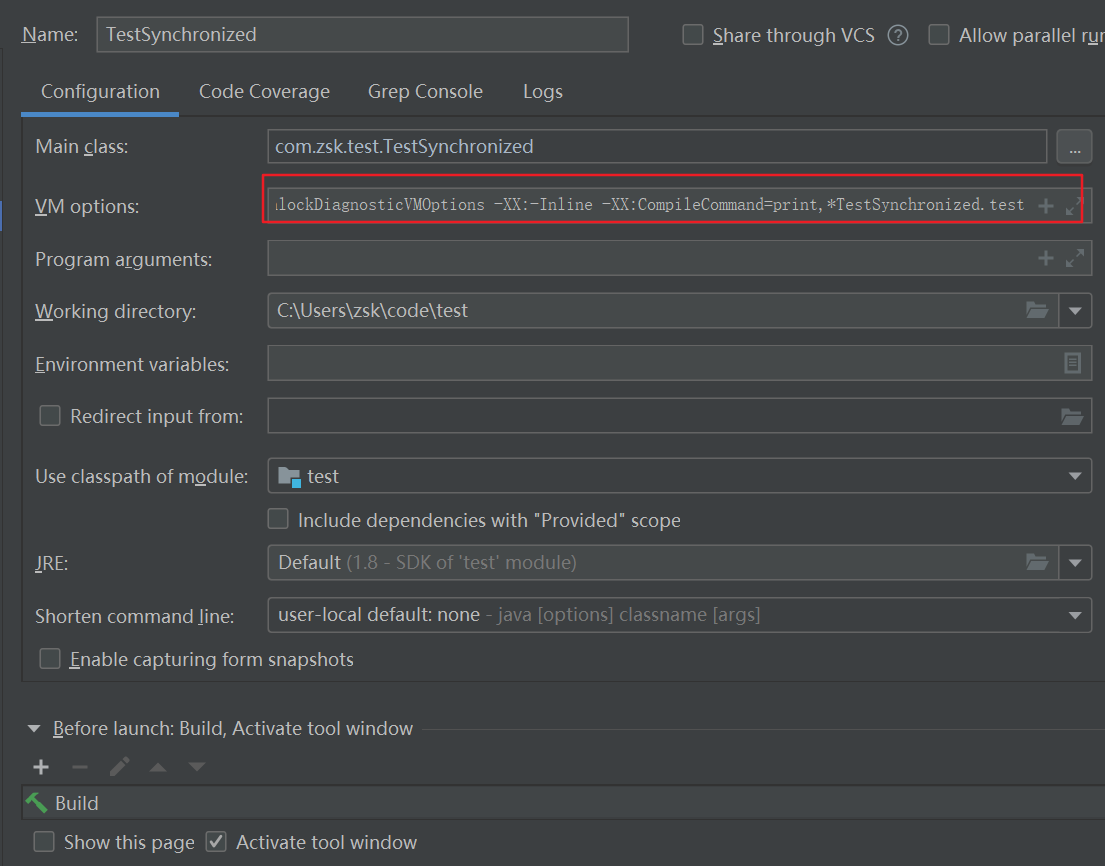
-server -Xcomp -XX:+UnlockDiagnosticVMOptions -XX:-Inline -XX:CompileCommand=print,*TestSynchronized.test
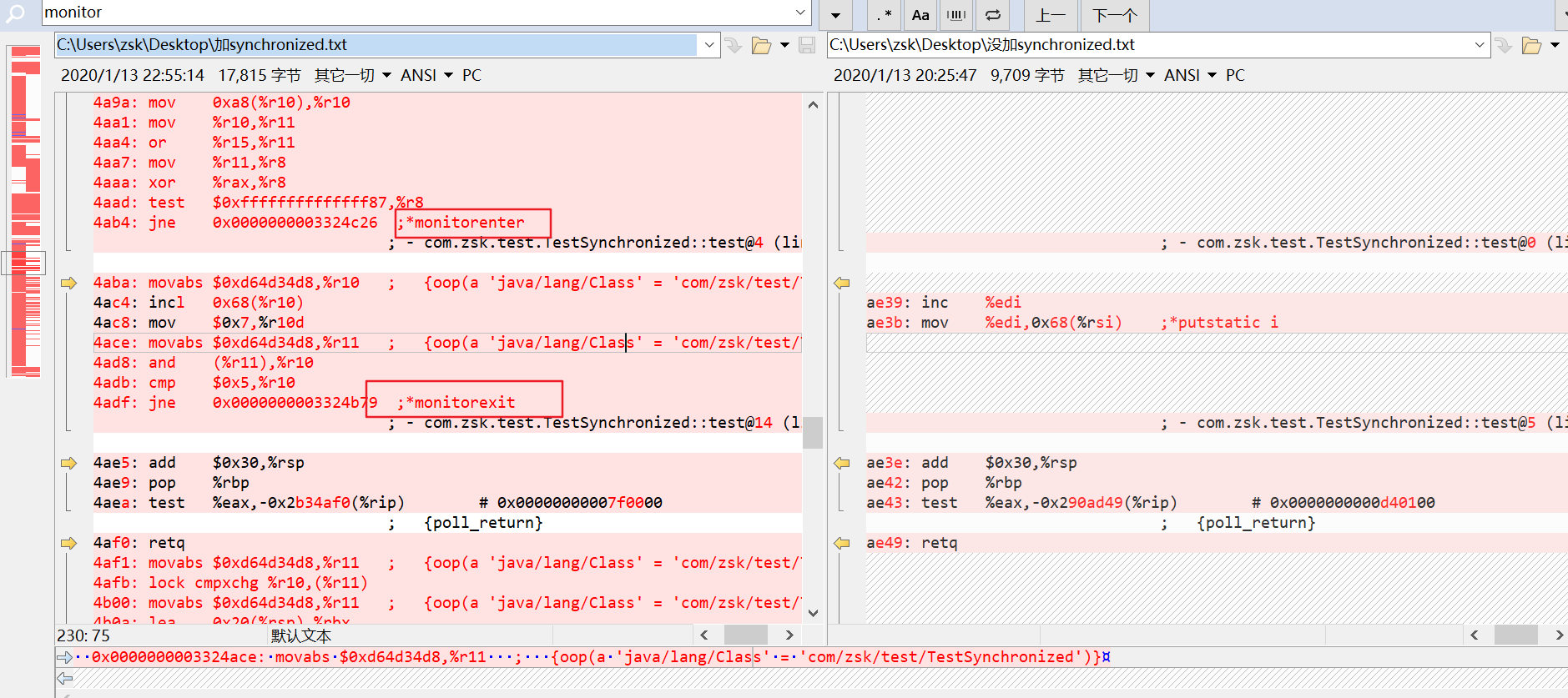
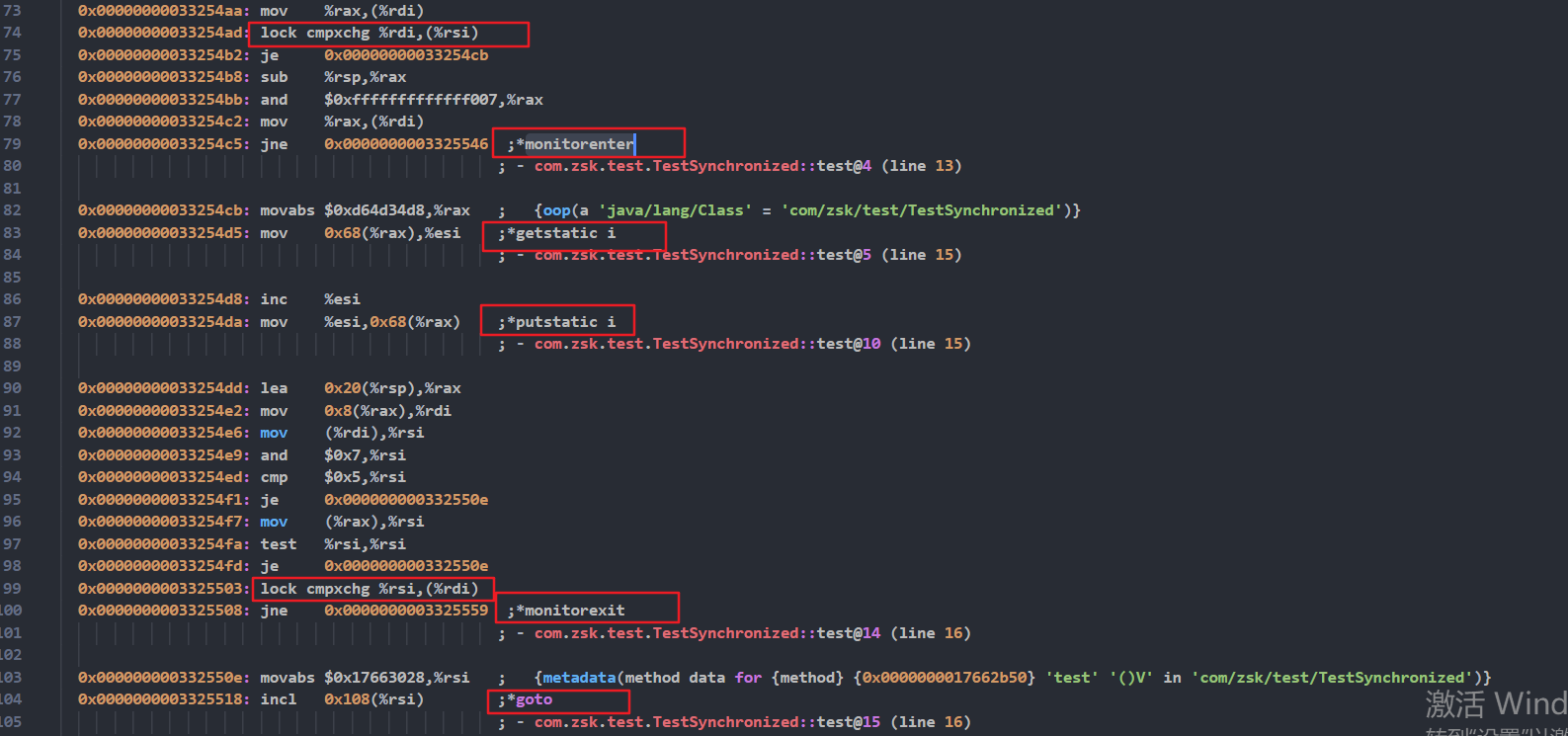
使用 IDEA 的话如下图:
从汇编代码可以看出 monitorenter 与 monitorexit 包裹了如下代码:
0x00000000033254d5: mov    0x68(%rax),%esi    ;*getstatic i //从内存中读取val的值到寄存器中
                                                ; - com.zsk.test.TestSynchronized::test@5 (line 15)

0x00000000033254d8: inc    %esi  //执行val++
0x00000000033254da: mov    %esi,0x68(%rax)    ;*putstatic i//将val的值从寄存器写回内存
                                                ; - com.zsk.test.TestSynchronized::test@10 (line 15)
并且 monitorenter 前采用了原子操作lock cmpxchg %rsi,(%rdi)进行中间值的交换。
如果交换成功,则执行 goto 直接退出当前函数。如果失败,执行 jne 跳转指令,继续循环执行,直到成功为止。
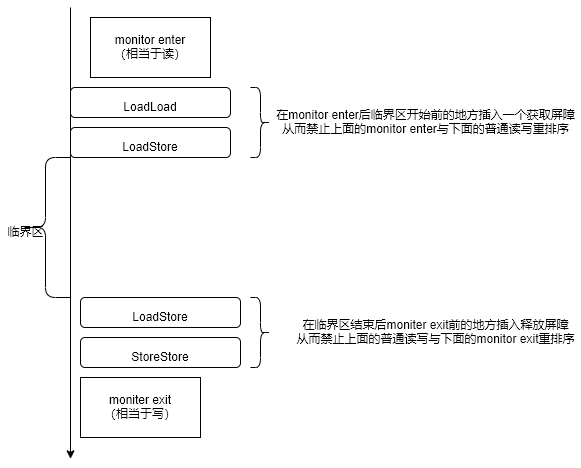
在 monitor enter 后临界区开始前的地方插入一个获取屏障,在临界区结束后 moniter exit 前的地方插入释放屏障。
获取屏障和释放屏障保证了临界区内的任何读写操作无法被重排序到临界区外
跟 volatile 一样
在临界区结束后 moniter exit 前之前插入释放屏障使得该屏障之前的任何读写操作都先于这个 moniter exit(相当于写)被提交;
在 monitor enter 后临界区开始前插入获取屏障使得这个 monitor enter(相当于读)先于该屏障之后的任何读写操作被提交。
public class MultiThread2
{
    private static int val = 0;

    public static void main(String[] args) throws InterruptedException
    {
        Thread thread1 = new Thread(()->{
            for (int i = 0; i < 100000; i++)
            {
                incr();
            }
        });

        Thread thread2 = new Thread(()->{
            for (int i = 0; i < 100000; i++)
            {
                decr();
            }
        });


        thread1.start();
        thread2.start();

        thread1.join();
        thread2.join();
        System.out.println(val);
    }

    private synchronized static void decr()
    {
        val--;
    }

    private synchronized static void incr()
    {
        val++;
    }
}
字节码如下图:
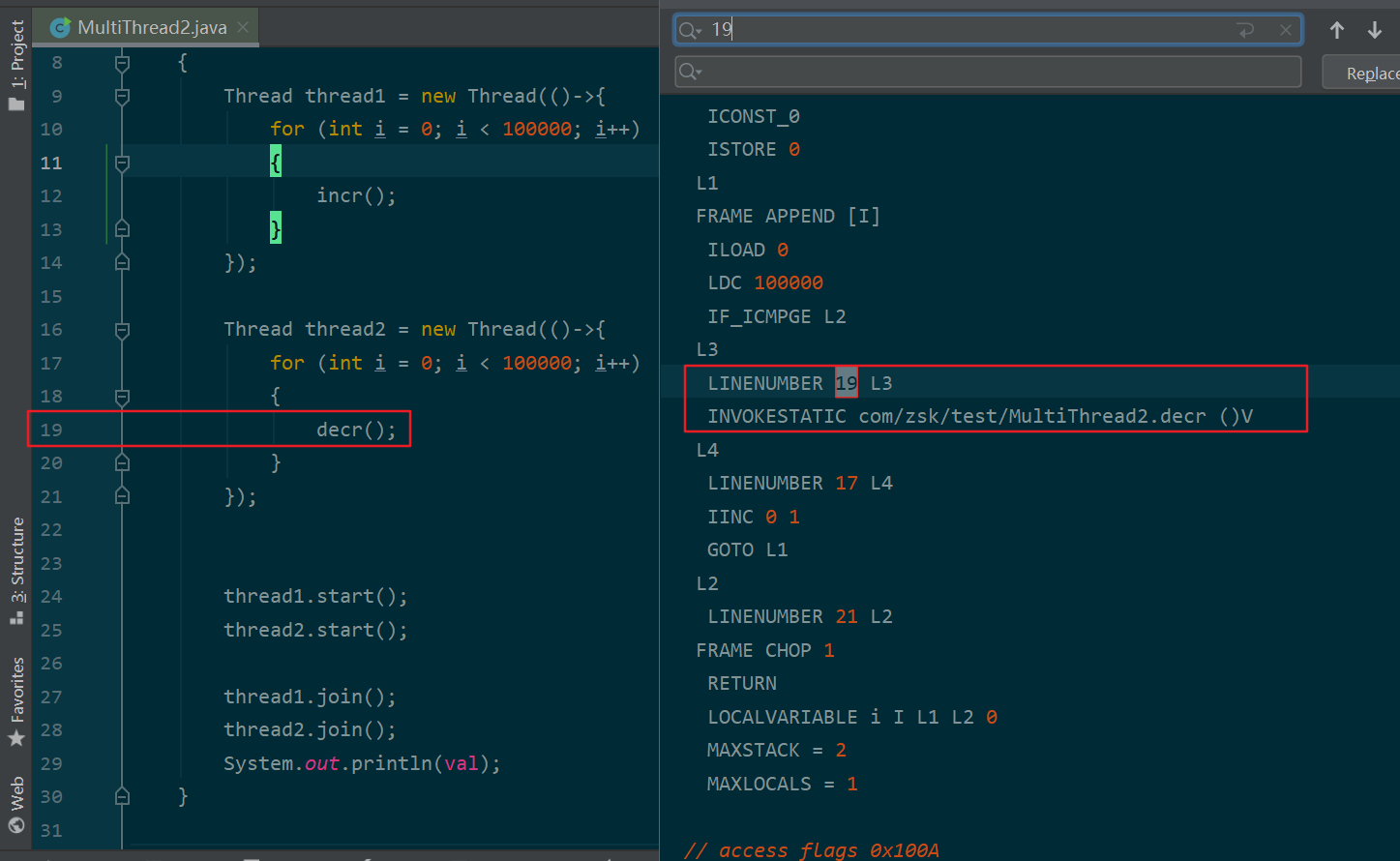
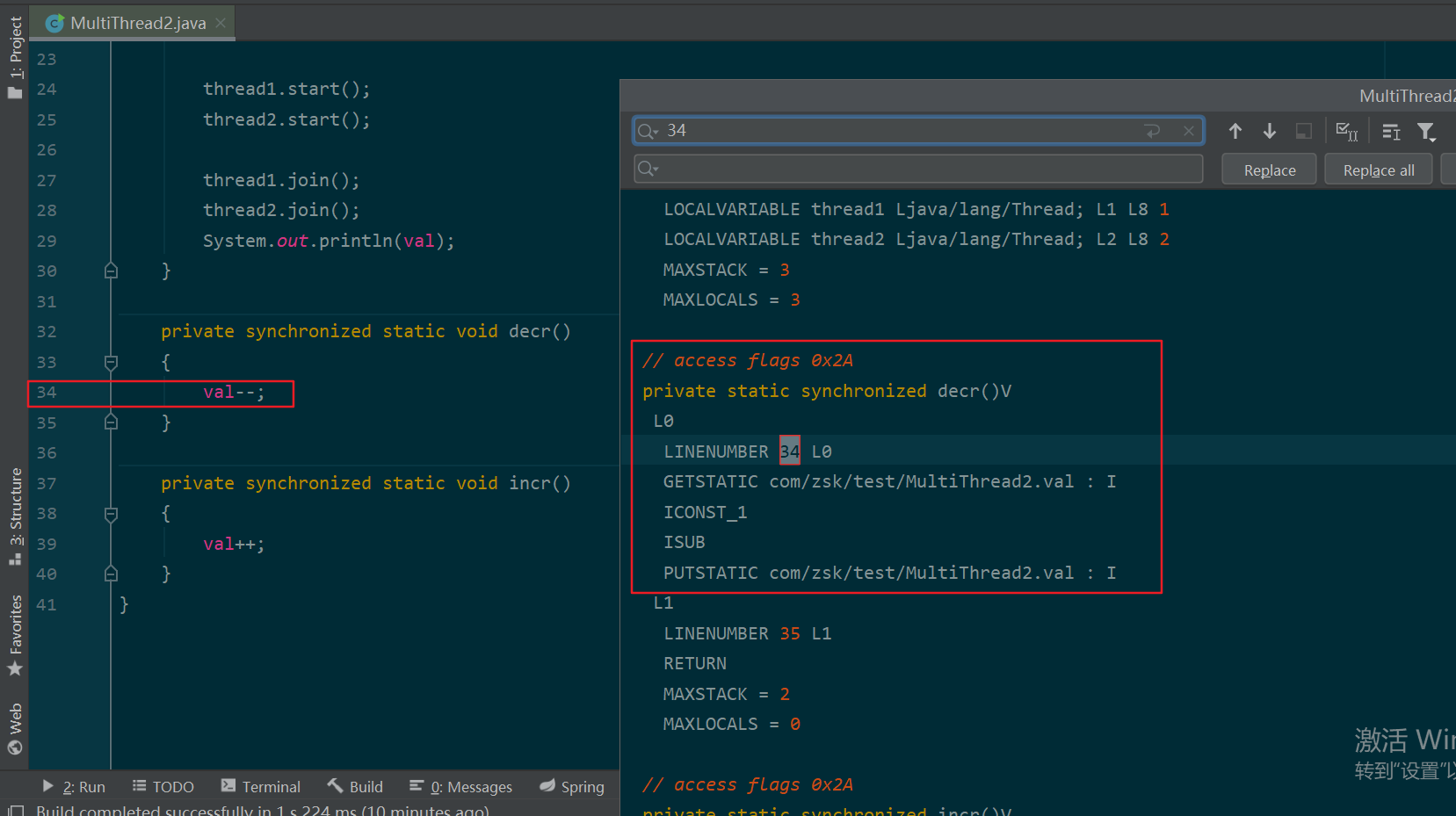
在 VM 字节码层面并没有任何特别的指令来实现被 synchronized 修饰的方法,而是在 Class 文件的方法表中将该方法的 access_flags 字段中的 synchronized 标志位置 1,表示该方法是同步方法并使用调用该方法的对象或该方法所属的 Class 在 JVM 的内部对象表示 Klass 做为锁对象。



 关注微信
关注微信